Choosing between ship model kits can be difficult when one option centers on a specialized historical proposal and the other on a destroyer with a documented service story. The right pick depends on what you want the build to represent: the German 1945 DD Projekt or the Fletcher Class Destroyer. This head-to-head keeps the decision practical by focusing on subject, construction, age level, and price.
Quick verdict
Choose the NOS Imperial Hobby Productions 12001 German 1945 DD Projekt 1/1200 Metal Kit if its German 1945 DD Projekt subject, metal construction, 1:1200 scale, and unassembled format are the main attractions. The 17 Years & Up age level also points toward an older-hobby project. Choose the Tamiya Models Fletcher Class Destroyer if the Fletcher Class subject and its World War II-through-Vietnam history matter more. The models are not interchangeable: one represents a proposed late-war design, while the other represents a class described as having served across three conflicts.
Listed-price comparison
| Kit | Listed price | Direct price difference |
|---|---|---|
| NOS Imperial Hobby Productions German 1945 DD Projekt | USD 49.99 | USD 22.99 more than Tamiya |
| Tamiya Fletcher Class Destroyer | USD 27.00 | USD 22.99 less than Imperial Hobby Productions |
Where each kit wins
- Imperial Hobby Productions German 1945 DD Projekt: This is the better fit for a shopper drawn to a factory-sealed kit, the listed 17 Years & Up age level, and a German late-war design that was never completed.
- Tamiya Fletcher Class Destroyer: This is the better fit for someone who wants a US-built destroyer with a defined service history. The description connects the class to World War II, Korea, and Vietnam and says 175 Fletchers were built during World War II.
Product notes
NOS Imperial Hobby Productions 12001 German 1945 DD Projekt 1/1200 Metal Kit
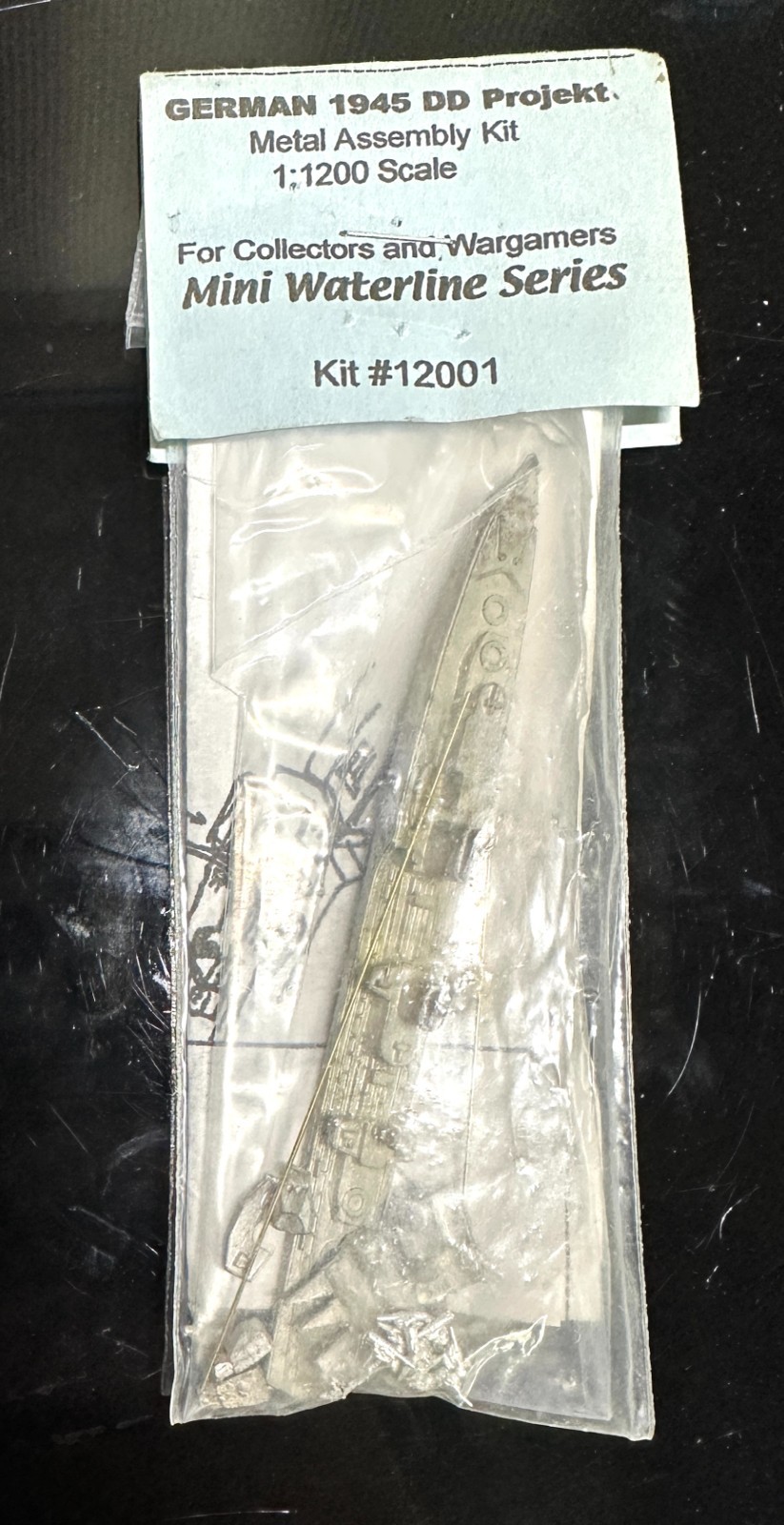
The main reason to choose this kit is its unusual historical premise. The description presents the German 1945 DD Projekt destroyer as a proposed late-war design intended to improve speed, anti-aircraft capability, and combat performance, with none completed before the war ended. That gives the build a clear what-if identity rather than a service record. It is also factory sealed in its original packaging, a point that suits a collector who wants the kit preserved before opening. The trade-off is practical: the assembly status is unassembled, and the age level is 17 Years & Up. Those details make it a focused older-hobby project, not a ready-made display item or an obvious choice for a younger builder.
Tamiya Models Fletcher Class Destroyer
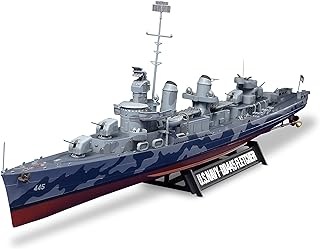
The best reason to choose Tamiya is the amount of historical context attached to the Fletcher subject. The description places the class in World War II, Korea, and Vietnam and names five 5-inch guns, 10 21-inch torpedoes, and a 38-knot capability. It also says 175 Fletchers were built during World War II, giving the subject a defined production and service story for a builder who enjoys researching the prototype alongside the model. The limitation is a matter of focus: a Fletcher Class Destroyer will not satisfy someone specifically seeking the German 1945 DD Projekt concept. Choose it for the US-built destroyer narrative, not for the Imperial kit's specialized German subject.
Final choice by use case
- For a German naval-history what-if: Choose the Imperial Hobby Productions kit. Its German 1945 DD Projekt subject, metal material, 1:1200 scale, and unassembled format give the project a clearly defined identity.
- For an established destroyer service story: Choose Tamiya. The Fletcher Class connection to World War II, Korea, and Vietnam provides a different historical direction.
- For a price-led decision: Choose Tamiya, whose listed USD 27.00 price is USD 22.99 below the Imperial kit's USD 49.99 price.
Neither is a universal winner. The Imperial kit is the focused choice for its German proposal and listed construction details; Tamiya is the clearer match when the Fletcher story or lower price decides the project.