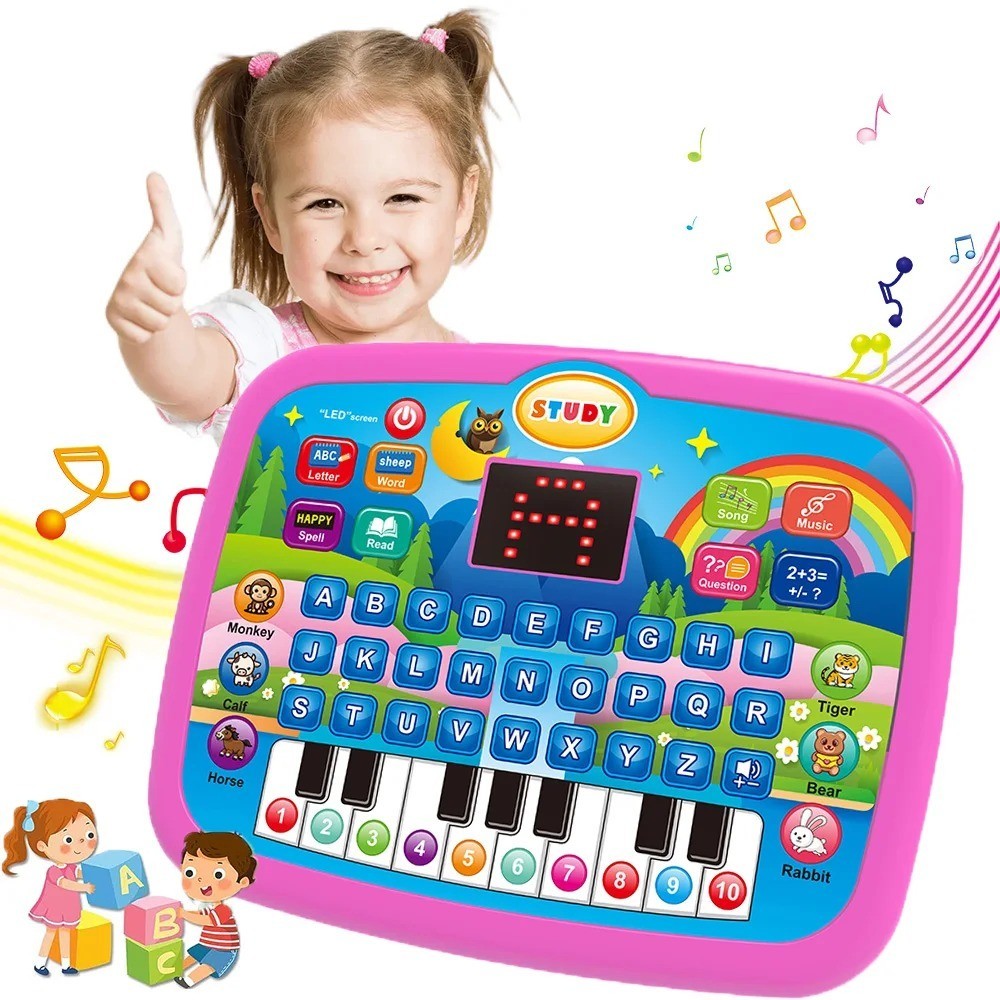
Choosing between educational toys is not only about the age range in a product title-it is about the kind of play you want to put in front of a child. The Educational Learning Toys for Kids Toddlers Age 3 4 5 6 7 8 Years Old Boys Girls centers on a sticky-ball target game, while the Educational Learning Toys for Kids Toddlers Age 2 3 4 5 6 7 Years Old Boys Girls is an electronic mini learning machine. One leads with movement and aiming; the other leads with electronic activities.
Quick verdict
Pick the Kids Sticky Ball Dart Board Game when the priority is an active game for shared play. At USD 4.37, it is the lower-priced choice and is described for family game nights, parties, classrooms, and everyday play.
Choose the Mini Learning Machine when English letters, basic arithmetic, songs, and electronic piano interaction are the better fit. Its listed price is USD 18.46, a USD 14.09 gap from the sticky-ball game, and its description is geared toward a multifunction electronic learning format.
At-a-glance comparison
| Detail | Kids Sticky Ball Dart Board Game | Mini Learning Machine |
|---|---|---|
| Listed price | USD 4.37 | USD 18.46 |
| Listed color | Multicolor | Blue/Pink |
| Shared toy type | Learning Toys | Learning Toys |
| Shared theme | Numbers & Letters | Numbers & Letters |
| Skills named | Focus, concentration, and motor skills | Creativity, hand-eye coordination, and memory |
Where each educational toy wins
The Kids Sticky Ball Dart Board Game wins for active occasions. Its description specifically places it in family game nights, birthday parties, classroom settings, and everyday play. Throwing soft sticky balls at a target gives the activity a clear, easy-to-explain format that can suit friendly competition and movement-focused play.
The Mini Learning Machine wins for electronic variety. It combines several activity categories in one format, including letter learning, simple number calculation, songs, and piano interaction. That makes it the more natural choice when the goal is to rotate through different electronic prompts rather than organize a target-game round.
Product notes
Kids Sticky Ball Dart Board Game
This is the straightforward pick for a child who enjoys throwing, aiming, and playing alongside siblings, classmates, or family members. The game uses soft sticky balls instead of traditional darts, with a target-based activity that emphasizes hand-eye coordination and aiming. Its description also calls out physical movement, focus, concentration, and motor-skill development, giving the play pattern a more active feel than a seated electronic activity. The multicolor option suits a bright game-room or playroom look. Its limitation is also its defining trait: this is a sticky-ball target game built around rounds of play and friendly competition. For English letters, arithmetic, songs, or piano interaction, the Mini Learning Machine has the more directly aligned activity set.
Mini Learning Machine
Choose this mini learning machine for electronic play that moves among letters, basic arithmetic, children's songs, and electronic piano interaction. Those named functions give it a broader menu of activity types than a single target-game format, while the listed skills include creativity, memory, and hand-eye coordination. The Blue/Pink color entry may also appeal when that color combination is preferred. This option makes the most sense when learning prompts and music-based interaction are central to the play routine. Its trade-off is that its focus remains electronic and multifunctional rather than being a physical, toss-and-aim game. For a birthday activity, a classroom target round, or a family competition, the sticky-ball dart board is the more direct match.
Final choice by use case
Choose the Kids Sticky Ball Dart Board Game for movement-led play, group occasions, and a lower listed price. Choose the Mini Learning Machine for electronic letter, number, song, and piano activities. Both are listed as learning toys with a Numbers & Letters theme, but they create distinctly different play sessions: one is centered on an active target game, and the other on electronic interaction.