Choosing between vehicle & armor model kits comes down to the subject you want on your shelf. The MPC 1967 Pontiac GTO is a classic American car with a clearly described parts count and skill level, while the Tamiya German Pzkfw V Panther Ausf A centers on a WWII tank. The right choice depends less on a universal winner and more on whether your interest is automotive history or armored warfare.
Quick verdict
Choose the MPC 1967 Pontiac GTO if you want a classic-car project with a 1:25 scale, 85+ parts, Skill Level 2, and an explicitly identified age recommendation of 14. Its description also calls out a 400 cu. in. V8, 4-speed transmission, separate rear suspension and exhaust detail, plus optional custom components.
Choose the Tamiya German Pzkfw V Panther Ausf A if the subject itself is the priority. Its title names a specific Panther variant, and the description places the tank in the WWII period, including its development as a response to the Russian T-34.
At-a-glance comparison
| Kit | Listed price | Subject | Distinctive detail |
|---|---|---|---|
| MPC 1967 Pontiac GTO | USD 17.99 | 1967 American classic car | 1:25 scale, 85+ parts, Skill Level 2 |
| Tamiya German Pzkfw V Panther Ausf A | USD 26.35 | German Panther tank | WWII historical subject and named Ausf A variant |
Where each kit wins
- Classic-car focus: The MPC is the clear fit because it recreates a 1967 Pontiac GTO rather than an armored vehicle.
- Armor and military history: The Tamiya Panther wins for shoppers specifically seeking a tank subject connected to WWII.
- Explicit build parameters: The MPC gives more immediately visible project information through its 1:25 scale, 85+ parts, Skill Level 2, and Age 14 wording.
- Price comparison: The MPC sits $8.36 below the Tamiya kit, making the choice easier for shoppers who want the lower-priced entry in this pair.
Product notes
MPC 1967 Pontiac GTO
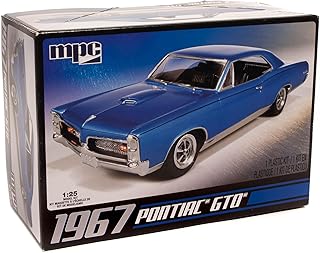
The MPC kit is the more natural pick for a builder whose display theme is classic American cars. Its 1:25 scale and 85+ parts give the project a defined format, while Skill Level 2 and the Age 14 wording help set expectations for the intended audience. The subject is unusually specific: a blue 1967 Pontiac GTO, complete with a described 400 cu. in. V8, 4-speed transmission, bucket seats, floor shifter with console, rear suspension and exhaust detail. Optional supercharger, headers, custom wheels and racing bucket seats add several directions for the finished replica. The limitation is equally clear: a Pontiac GTO cannot satisfy someone shopping specifically for a tank or military vehicle model.
Tamiya German Pzkfw V Panther Ausf A
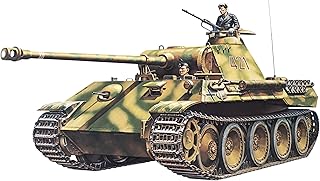
The Tamiya kit earns its place through subject choice. The full name identifies the German Pzkfw V Panther Ausf A, giving armor enthusiasts a particular tank variant rather than a generic military vehicle. Its historical setting is also well defined: the Panther was ordered in 1942 as a counter to the Russian T-34 and served from mid-1943 through the end of World War II. That makes it a strong match for a display built around WWII armor or military history. The trade-off is the higher price in this head-to-head, so it asks for more spending than the MPC kit. It also offers a very different project direction: buyers seeking a recognizable 1960s road car should choose the Pontiac instead.
Final choice by use case
- For a classic-car display: Pick the MPC 1967 Pontiac GTO. The 1967 subject, blue finish, 1:25 scale and automotive component details all point in the same direction.
- For a WWII armor collection: Pick the Tamiya German Pzkfw V Panther Ausf A. The named Panther variant and its WWII history make the subject-specific choice straightforward.
- For clearly stated build information: Choose the MPC because its title includes the parts count, Skill Level 2 and Age 14 guidance.
- For the lower-priced option: Choose the MPC, which is $8.36 below the Tamiya kit.
In short, the MPC is the better match for a car-focused project and more defined build brief. The Tamiya is the focused choice when the Panther tank and WWII setting matter most.
