Choosing wargaming terrain means deciding what your battlefield actually needs: a recognizable structure that anchors a fantasy scene, or a collection of smaller accessories that can add detail across ships, fortresses, and siege setups. The 3D Printed Fantasy Tower and Miniature Cannons 30 Count serve very different roles, so the best choice depends more on the scene than on the shared tabletop scale.
Quick verdict
The 3D Printed Fantasy Tower is the clearer choice for a vertical fantasy landmark and a hands-on painting project. Miniature Cannons 30 Count is the better fit when the scene needs many cannon accessories for ships, fortresses, or siege setups. At $23 versus $10, the listed-price difference is $13, making the cannon set the lower-priced route while keeping the role comparison straightforward.
Comparison at a glance
| Product | Listed price | Format and attributes | Best fit |
|---|---|---|---|
| 3D Printed Fantasy Tower | $23 | 2 floors, 3 pieces; 28mm and 32mm; unpainted, lightweight | Fantasy building scenery |
| Miniature Cannons 30 Count | $10 | 30-count bulk/lot; 28/32mm scale | Cannon accessories |
Where each product wins
3D Printed Fantasy Tower wins for architectural scenery. A fantasy tower is the more direct match when the table needs a building-shaped focal point for roleplaying, wargaming, or skirmish scenes. Its three-piece construction also gives the terrain a defined assembly format.
Miniature Cannons 30 Count wins for cannon-focused scene building. The cannon pieces fit ships, fortresses, siege weapons, encounter maps, and dioramas, making them the more direct match for naval or siege accessories and repeated thematic details.
Product notes
3D Printed Fantasy Tower
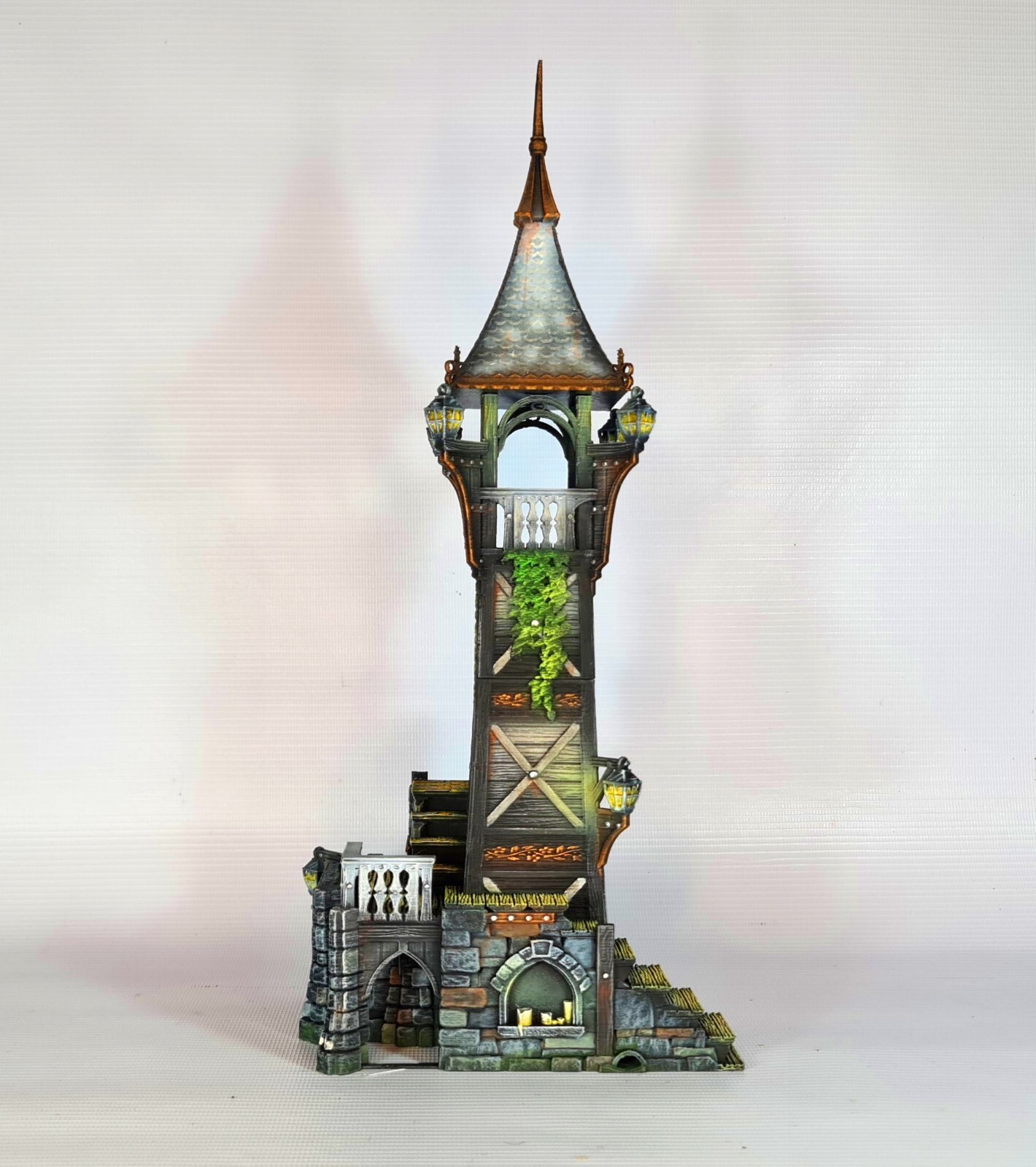
Choose the 3D Printed Fantasy Tower when your table needs a recognizable structure rather than a collection of small accessories. Its two-floor layout and three-piece construction give it a defined scenery role for tabletop roleplaying, wargaming, or skirmish settings. The lightweight format is useful for a terrain collection that moves between games. The limitation is concrete: it arrives unpainted in gray or black PLA, so the finish is a plain starting point rather than a painted display piece. That makes the tower a good fit for someone comfortable using unpainted scenery or taking on a paint project. The fantasy-tower format also makes its role narrower than a general scatter-accessory set, so choose it for architectural presence rather than a large quantity of separate props.
Miniature Cannons 30 Count
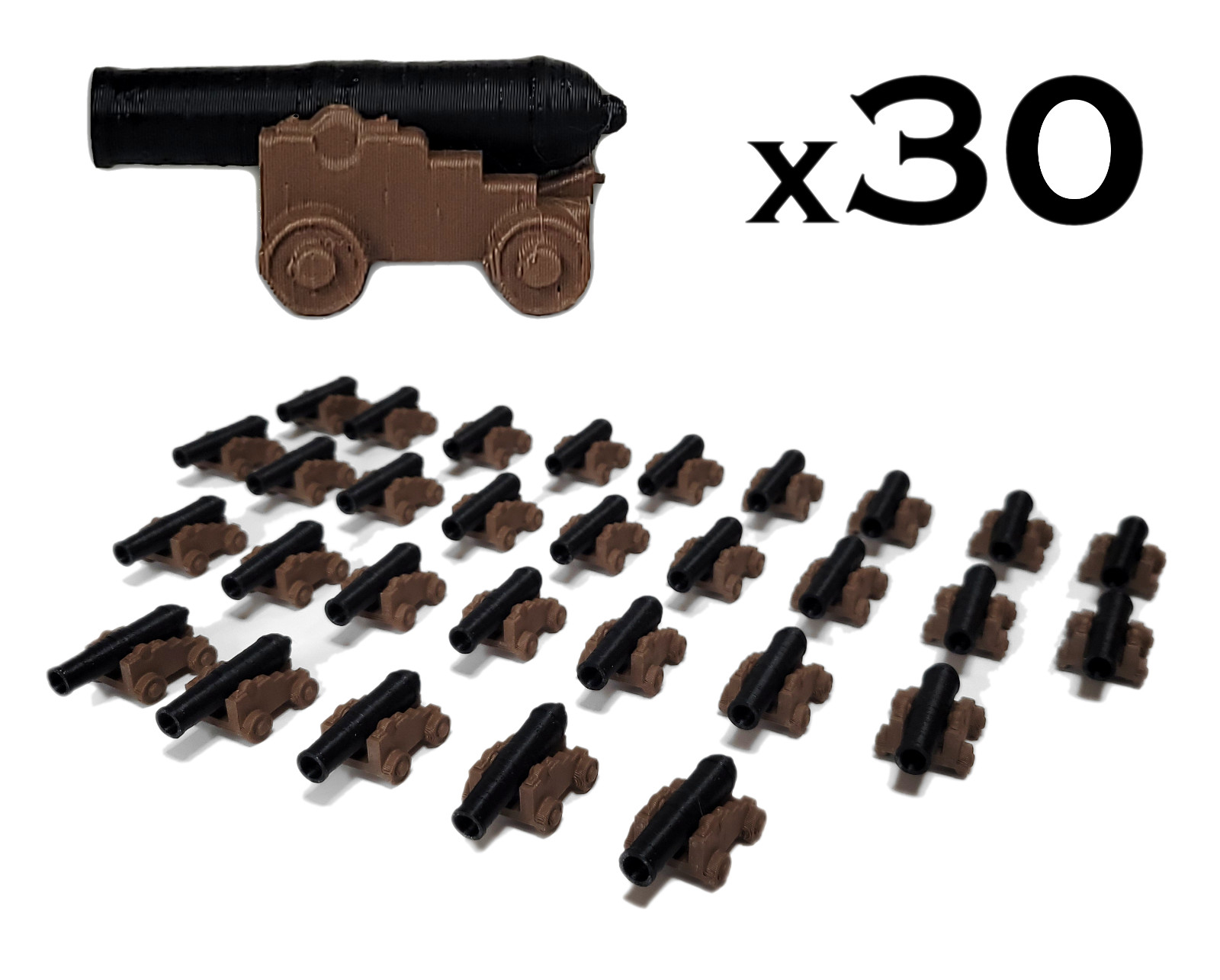
Miniature Cannons 30 Count is the focused pick when the table needs repeated weapon details. The set contains 30 pieces and is aimed at wargaming, D&D, and RPG terrain. Its cannon-focused format suits naval battles, coastal fortresses, siege scenes, encounter maps, and dioramas. That gives the set a clear thematic role when the battlefield needs ship or fortification dressing rather than a standalone building. The limitation is specialization: a cannon set contributes accessories instead of a multi-floor architectural focal point. Choose it when the scene calls for weapon scenery that can be distributed across a themed setup; choose the tower when the central need is a piece of fantasy architecture.
Final choice by use case
- For a fantasy building centerpiece: choose 3D Printed Fantasy Tower. The product title and tower format directly match a scenery-led table.
- For naval, coastal-fortress, or siege dressing: choose Miniature Cannons 30 Count. Its cannon-specific format is aligned with those scenes.
- For scale-led selection: either can serve a 28/32mm table. Make the decision based on whether you need building scenery or cannon accessories, since scale does not separate them.
For most roleplaying or skirmish tables built around a landmark, the Fantasy Tower is the more distinctive choice. For shoppers expanding a ship, fortress, or siege theme with multiple small details, Miniature Cannons 30 Count is the more targeted fit.