Choosing among rc motors, escs & servos starts with identifying the needed job: power control or steering control. An electronic speed controller and a servo are different components, so a price difference cannot make one a substitute for the other. The 80A Brushless Waterproof ESC is the power-control choice for an electric RC setup, while the 25KG Digital Servo is aimed at steering, RC upgrades, robots, and DIY control projects. The right choice is about replacing the correct type of part.
Quick verdict
Choose the 80A Brushless Waterproof ESC when you need brushless speed control for an electric RC setup. Choose the 25KG Digital Servo when the job is steering or a control project. They are a role-based split, not a performance contest: the ESC is the relevant power-control part, while the servo is the relevant steering part.
Compact comparison
| Product | Role | Listed price | Listed fit |
|---|---|---|---|
| 80A Brushless Waterproof ESC | Brushless speed controller | USD 33.32 | Electric RC car; 1:8 scale |
| 25KG Digital Servo | Steering and control servo | USD 16.94 | 1:8 and 1:10 RC cars |
Where each product wins
Where the 80A Brushless ESC wins
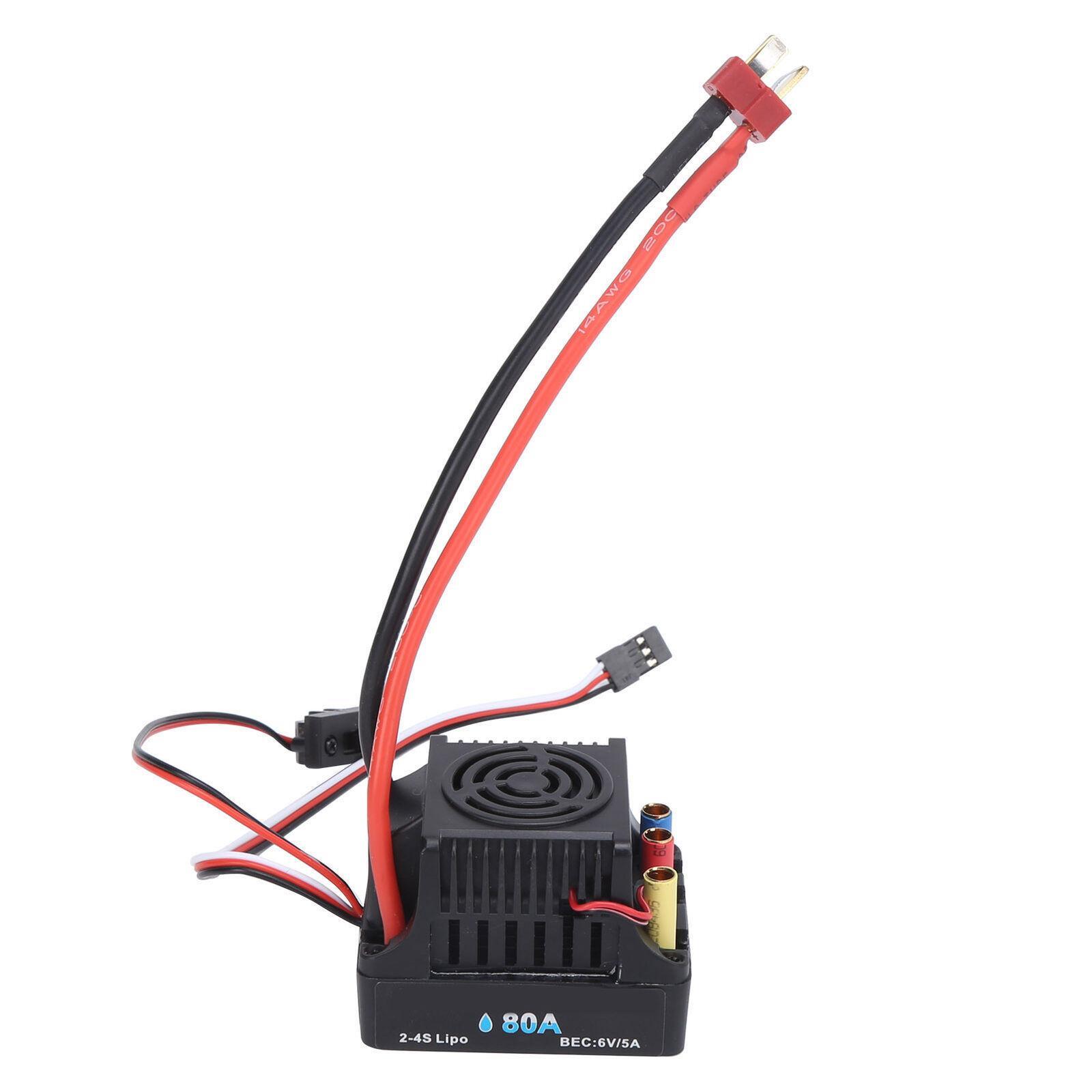
- Brushless control: Its title directly identifies it as a brushless electronic speed controller, making it the purposeful choice when that is the component being replaced.
- Electric RC use: The electric designation and 1:8 fit give it a defined target rather than a general steering application.
- Electrical specifications: Waterproof and dustproof construction, 80A continuous current, 480A burst current, and a 6V/5A switch-mode BEC provide clear selection points for a compatible build. These are specifications, not proof that it is superior to the servo.
Where the 25KG Digital Servo wins
- Steering replacement: Its stated uses include steering servo, RC upgrade, robot servo, and DIY control project, directly matching a steering-focused repair or build.
- Broader stated scale range: The 1:8 and 1:10 RC-car fit covers more scale categories than the ESC's 1:8 entry.
- Servo-focused features: Digital control, metal gears, high torque, fast response, and waterproof construction define it as a control-movement component rather than a speed controller.
Product notes
80A Brushless ESC
Choose the 80A Brushless ESC when the needed replacement is a brushless electronic speed controller for an electric RC setup. It specifies a waterproof and dustproof design, strong heat dissipation, a 6V/5A switch-mode BEC, and support for 2-4 cell LiPo batteries, giving the choice a clearly defined electrical profile. Its limitation is scope: the listed fit is a 1:8 RC car, and the part controls speed rather than steering. That makes it a focused answer to a brushless power-control job, but the wrong component for a servo replacement. The 80A label describes the ESC type and current specification; it is not a reason to compare this controller directly with a servo's torque rating.
25KG Digital Servo Metal Gear High Torque Waterproof
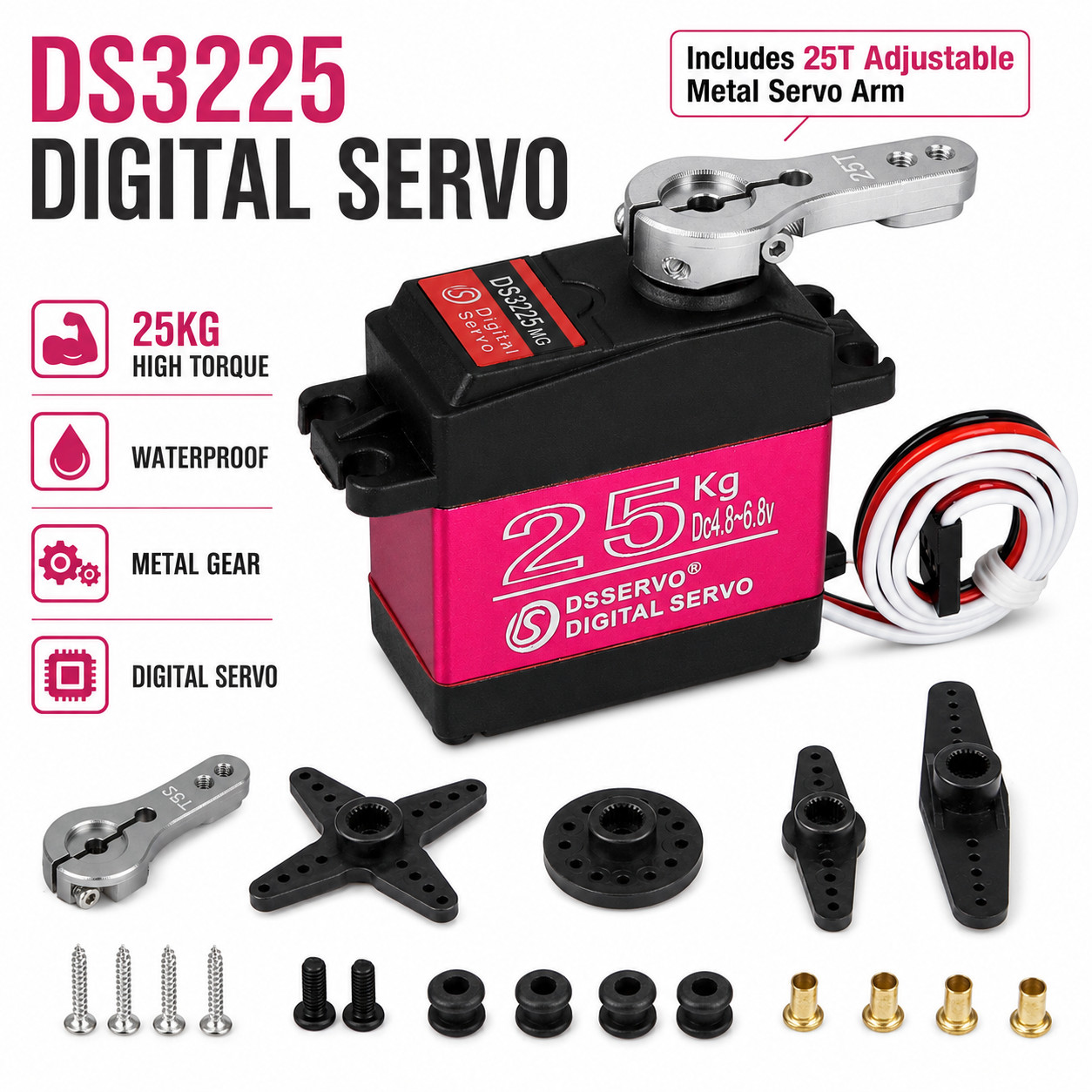
The 25KG Digital Servo makes the most sense when steering is the task: its stated uses include steering servo, RC upgrade, robot servo, and DIY control project. Digital control, metal gears, fast response, waterproof construction, and a stated 25kg/cm torque figure at 6.8V give it a concrete steering-oriented specification set. A practical limitation is that it is a servo, not an electronic speed controller, so it cannot fill the brushless power-control role of the 80A ESC. Its approximately 300mm connector wire is another concrete specification for a project. The listed 1:8 and 1:10 RC-car applications broaden the stated use cases, but do not change its steering-first role.
Final choice by use case
- Replacing a brushless speed controller: choose the 80A Brushless Waterproof ESC. Its product title and ESC type match that job.
- Replacing an RC steering servo: choose the 25KG Digital Servo. Its stated uses explicitly include steering.
- Choosing by listed price after the role is settled: the servo is USD 16.94 and the ESC is USD 33.32, a $16.38 spread. That difference does not turn the two parts into substitutes, so match the component type first.